
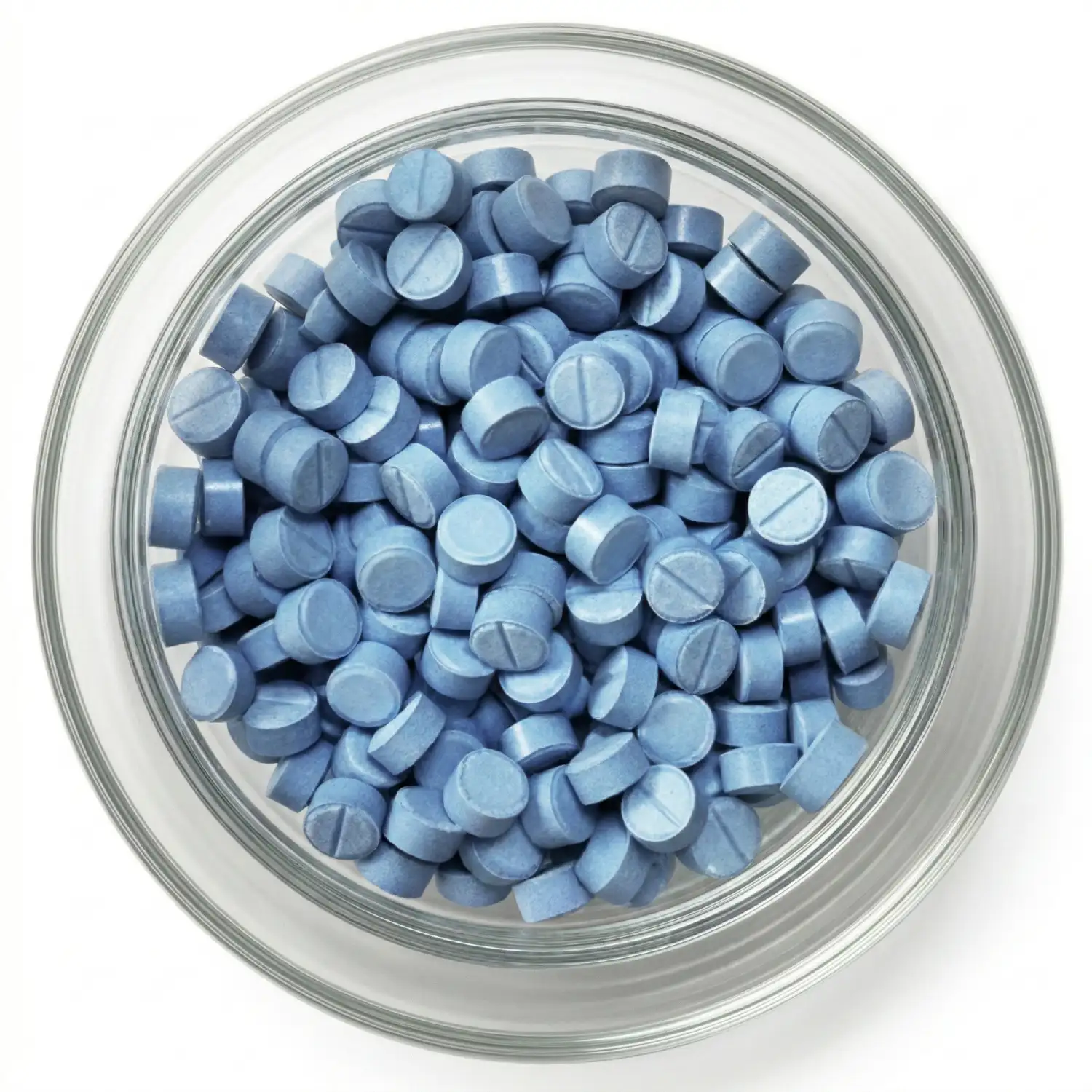
Stoffprofil und chemische Charakterisierung von 2C-G-5
3,4‑Norbornyl‑2,5‑dimethoxyphenethylamin ist ein synthetisches Derivat der Phenethylamin-Klasse, welches durch eine komplexe tricyclische Ringstruktur auf dem klassischen 2C-Grundgerüst aufbaut.
Substitution regulierter Derivate: 2C-B & klassische Phenethylamine
Durch weitreichende regulatorische Anpassungen sind die meisten traditionellen Phenethylamin-Derivate für den freien Laborbedarf nicht mehr verkehrsfähig. 2C-G-5 füllt diese Lücke als hochpotenter, chemisch eigenständiger Nachfolger und dient als legales Referenzmaterial für analytische Vergleiche mit folgenden illegalisierten Substanzen:
2C-B (4-Brom-2,5-dimethoxyphenethylamin)Verwandte Halogen-substituierte 2C-Derivate
Die Integration eines Norbornyl-Rests am Phenylring garantiert eine rechtssichere Handhabung, während die kernstrukturellen Eigenschaften der 2C-Familie für In-vitro-Studien erhalten bleiben.
Determinierung des rechtlichen Status für die in-vitro-Analytik
Die strukturelle Innovation und gesetzliche Abgrenzung dieses Moleküls manifestiert sich in der Anfügung eines tricyclischen Norbornyl-artigen Rings an die Positionen 3 und 4 des Phenyl-Grundgerüsts. Diese komplexe, raumfüllende Modifikation sowie die charakteristischen Methoxygruppen an Position 2 und 5 schließen 2C-G-5 explizit aus den gängigen Strukturdefinitionen aktueller Betäubungsmittel- und NpSG-Anlagen aus.
Pharmakokinetische Klassifikation: Direkte Aktivität (Kein Prodrug)
In der biochemischen Nomenklatur wird 2C-G-5 als stimulierend-psychedelisches Phenethylamin eingestuft. Ein essenzieller Unterschied zu modernen Lysergsäure-Derivaten (wie 1D-LSD oder 1V-LSD) besteht in seinem Wirkmechanismus:
- Keine Prodrug-Eigenschaften: 2C-G-5 ist kein Prodrug von 2C-B. Es bedarf keiner enzymatischen in-vivo-Transformation oder chemischen Hydrolyse, um pharmakologische Rezeptoraffinität zu entwickeln.
- Die Verbindung ist in ihrer isolierten, primären Form vollständig aktiv.
- Das Molekül bindet bei in-vitro-Rezeptor-Assays eigenständig, wobei die Methoxygruppen maßgeblich die Lipophilie und somit die Kinetik steuern.
Analytische Differenzierung und Kinetik (Vergleich zu 2C-B)
Obwohl die Grundstruktur stark an 2C-B angelehnt ist, zeigen empirische Daten deutliche Abweichungen in der Halbwertszeit und Reaktionsdauer, welche primär von der Einsatzmenge abhängig sind:
- Dosisabhängige Wirkdauer: Im Gegensatz zu klassischen 2C-Verbindungen (wie 2C-B oder 2C-G-7) skaliert die simulierte Wirkdauer von 2C-G-5 extrem stark mit der eingesetzten Stoffmenge.
- Kinetische Äquivalenz: Analytische Vergleichsreihen belegen, dass bei einer exakten Quantifizierung von 7 mg die Rezeptorkinetik und Wirkdauer nahezu identisch mit den Standard-Parametern von 2C-B verlaufen.
Spezifikationen der Trägermatrix (7 mg Pellets)
Um eine präzise Handhabung ohne aufwendige Mikrowaagen-Kalibrierung zu ermöglichen, wird dieser Referenzstandard nicht als loses Pulver, sondern in einer homogenisierten festen Trägermatrix bereitgestellt.
| Format / Träger | Aktiver Wirkstoffgehalt (2C-G-5) |
|---|---|
| Homogenisiertes Pellet (gepresst) | Exakt 7 mg pro Einheit |
Diese exakte Kalibrierung auf 7 mg wurde spezifisch gewählt, um bei pharmakokinetischen Untersuchungen exakt die zeitlichen Referenzwerte (Halbwertszeit/Wirkdauer) des nicht mehr verfügbaren 2C-B abzubilden.
Spezifikationen zur Handhabung und Lagerstabilität (GLP-Richtlinien)
Phenethylamine weisen im Vergleich zu Tryptaminen oder Ergolinen (LSD-Derivaten) eine signifikant höhere strukturelle Grundstabilität auf. Dennoch gelten für die Arbeit mit hochpotenten Pellets strenge laborpraktische Regeln:
- Thermische Stabilität: Die Substanz in der Pellet-Matrix ist bei konstanter Raumtemperatur hervorragend lagerfähig. Extreme Hitze oder direkte Sonneneinstrahlung sind zur Wahrung der molekularen Integrität dennoch zu vermeiden.
- Feuchtigkeitsschutz: Die Trägermatrix der Pellets kann bei hoher Luftfeuchtigkeit aufweichen oder degradieren. Eine Lagerung im hermetisch verschlossenen Zip-Beutel (ideal mit Silica-Gel) ist zwingend erforderlich.
- Mechanische Handhabung: Bei der Zerkleinerung der Pellets für die Analyse ist Atemschutz zu tragen, da entstehender Feinstaub über die Schleimhäute hochgradig resorbiert werden kann.
Physikochemische Parameter & Identifikation
| Summenformel | C15H21NO2 |
|---|---|
| Molare Masse | 247.33 g/mol |
| IUPAC-Name | 3,4‑Norbornyl‑2,5‑dimethoxyphenethylamin |
| CAS-Nummer | N/A (Spezifische Neuentwicklung) |
| Darreichungsform | Präzisions-Pellets (Trägermatrix) |
Gesetzliche Vorgaben und Arbeitsschutz (Compliance)
Die Bereitstellung der 2C-G-5 Pellets erfolgt ausnahmslos für legitime in-vitro-Forschungsprojekte. Jegliche Anwendung in-vivo (human oder veterinär) ist strikt untersagt.
-
BtMG-Status: Die Verbindung unterliegt nicht den Bestimmungen des Betäubungsmittelgesetzes (Referenz: 25. BtMGAnlÄndV; Stand 07.08.2025).
-
NpSG-Status: Die spezifische Struktur (Norbornyl-Modifikation) ist nach aktuellem Stand von der Anlage des Neue-psychoaktive-Stoffe-Gesetzes für Phenethylamine ausgenommen (Referenz: 6. NpSGAnlÄndV; Stand 02.12.2025).
-
AMG-Status: Keine Einstufung oder Subsumierung unter den Arzneimittelbegriff.
-
Behördliche Zuständigkeit: Keine regulatorische Erfassung durch Strafverfolgungsbehörden.
Bitte halten Sie stets die allgemeinen Arbeitsschutzrichtlinien (GLP) für den sicheren Umgang mit Laborchemikalien ein. Hier finden Sie alle von uns angebotenen Referenzstandards der Phenethylamin-Reihe.
Rezensionen
Es gibt noch keine Rezensionen.