
Substance Profile and Chemical Characterization of 1Fe-LSD
The substance 1-Ferrocenyl-LSD represents a significant advancement in the field of lysergamide research chemicals. The molecule is built upon the well-established ergoline backbone.
1Fe-LSD clearly demarcated from regulated substance groups
The distinct feature of this compound is the addition of a ferrocenecarbonyl moiety at the indole nitrogen. This ferrocene system – characterized by two cyclopentadienyl-bonded rings and a central iron atom – significantly alters the physical and structural properties of the derivative. This modification clearly separates 1Fe-LSD from regulated substance groups and opens the door to entirely new, legal experimental series.
Generation Change: The new pellet reference standard
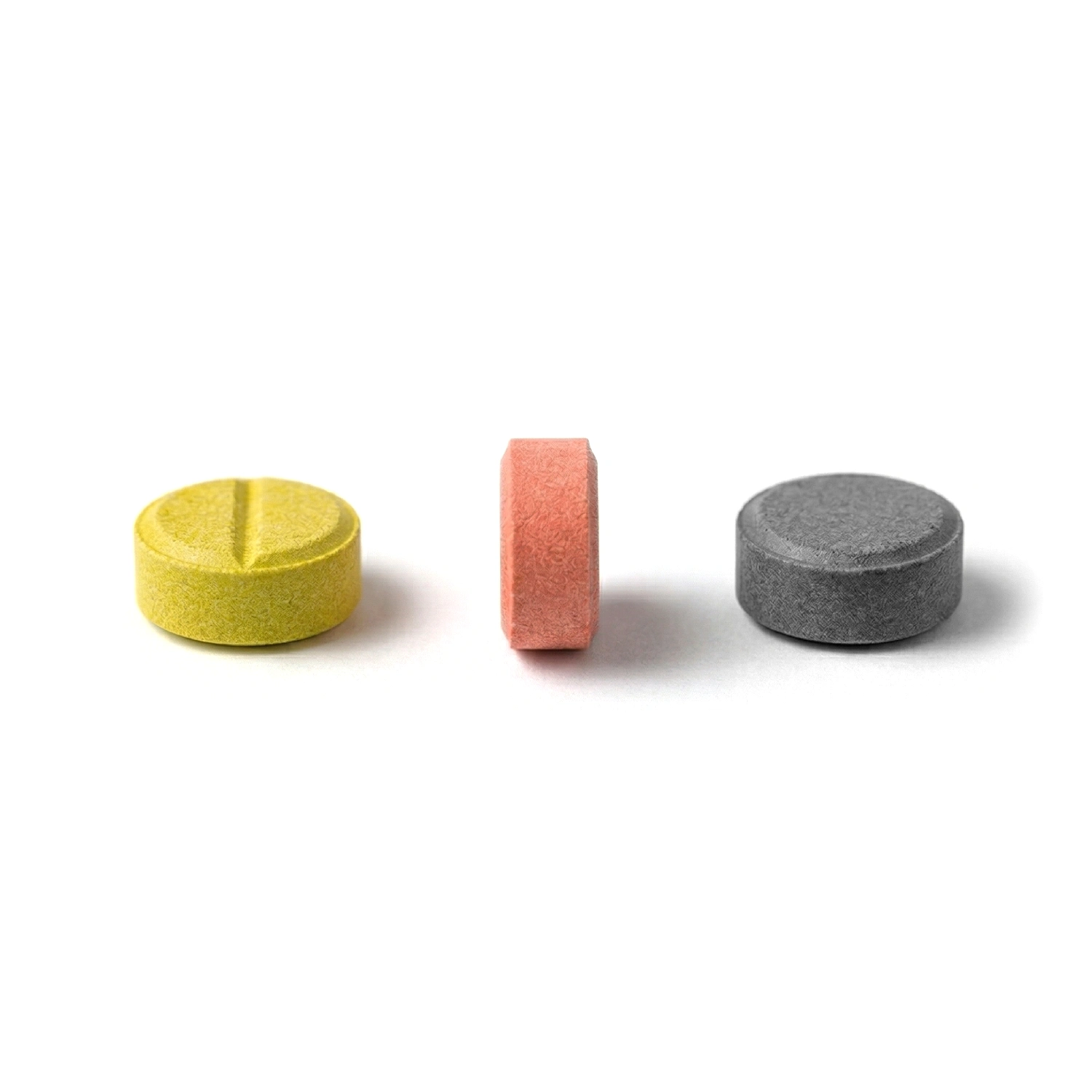
The introduction of 1Fe-LSD Micropellets marks a complete generational shift in lysergamide analytics. Due to the ferrocene complex at the indole nitrogen, this product serves as a fully legally compliant substitute for the following, now illegal derivatives:
1S-LSD1T-LSD1D-LSD1V-LSD1B-LSD1cP-LSD1P-LSDALD-52 (1A-LSD)
The micropellets guarantee precise molecular dosing, specifically calibrated to account for the increased molar mass of the ferrocene structure.
The Prodrug Mechanism in Detail
In chemical classification, 1Fe-LSD is categorized as a prodrug. For your research environment, this implies:
- The intact 1Fe-LSD molecule possesses little to no significant pharmacological binding affinity in-vitro.
- Conversion into the active base substance (LSD) occurs only in-vivo through endogenous enzymatic processes or chemical hydrolysis.
- This fundamental metabolism is already familiar to researchers from older analogs such as 1V-LSD, 1cP-LSD, or 1B-LSD.
Analytical Comparison: 1Fe-LSD vs. 1S-LSD and 1cP-LSD
Although 1Fe-LSD belongs to the same class of substances as 1P-LSD or 1D-LSD, early reports from our research groups show specific pharmacokinetic deviations:
- Metabolism: Data suggests an even faster enzymatic breakdown (shorter onset/rise) than its predecessor 1S-LSD.
- Universality: Despite the ferrocene group, 1Fe-LSD can be considered a full, identical substitute for formerly legal derivatives in most experimental setups.
Pellets: From Microdosing to Complex Macro-Studies
A decisive factor when working with 1Fe-LSD is the Molar Mass. Due to the heavy iron atom (ferrocene), the molecule has a higher intrinsic weight than conventional lysergamide prodrugs. For comparative studies, the dose must therefore be precisely calibrated.
To offer researchers maximum flexibility, we provide the pellets in three precise concentrations. Based on current equivalence calculations, the following guide values apply:
| 1Fe-LSD Pellet | Focus Area | Theoretical Equivalence |
|---|---|---|
| 10 µg (Micro) | Microdosing research | ≈ 7.5 µg 1S-LSD |
| 50 µg (Standard) | Moderate reaction analyses | ≈ 37.5 µg 1S-LSD |
| 300 µg (Extra) | In-depth macro studies | ≈ 225 µg 1S-LSD (or 150 µg LSD-25) |
Expert Notes on Laboratory Handling of Pellets
Working with pressed pellets requires different laboratory routines than handling impregnated blotters. Please observe the following guidelines to maintain the chemical integrity of the 1Fe-LSD:
- Physical Stress (Abrasion): Unlike blotters, pellets can produce abrasion under heavy mechanical stress. Store containers in a vibration-free environment to avoid a loss of active ingredient precision due to dust formation.
- Climatic Conditions: Lysergamides exhibit high baseline stability. For regular laboratory operation, dry storage at room temperature is entirely sufficient.
- Handling Moisture: The pellets are not hygroscopic. If you prefer refrigerated storage for long-term studies, it is still mandatory to use airtight vessels (e.g., amber glass). Only open the vessel after full acclimation to room temperature to rule out condensation damage to the pellets.
- Contamination Protection: Wearing laboratory gloves is mandatory even with pellets. This serves less for self-protection and more to prevent the transfer of skin oils, which could distort subsequent in-vitro analysis of the tablet binders and the active ingredient.
Specifications & Technical Data
| IUPAC Name | (8β)-1-ferrocenecarbonyl-N,N-diethyl-6-methyl-9,10-didehydroergoline-8-carboxamide hemi-L-tartrate |
|---|---|
| Molecular Formula | C31H34N3O2Fe |
| Molar Mass | 536.46 g/mol |
| CAS Number | N/A (New development) |
| Dosage Form | Pellets (Micro & Macro pressings) |
Safety & Legal Provisions (Germany)
The distribution of 1Fe-LSD pellets is strictly and exclusively for laboratory research purposes. The product is expressly not approved for in-vivo experiments on animals or for human consumption.
- Narcotics Act (BtMG): The substance is not listed in any of the schedules to the BtMG (as of 26. BtMGAnlÄndV; 24.12.2025).
- New Psychoactive Substances Act (NpSG): The specific ferrocene structure does not fall under the current version of the NpSG (as of 6. NpSGAnlÄndV; 02.12.2025).
- Medicines Act (AMG): The compound is not to be classified as a medicinal product.
- Consequently, there is currently no jurisdiction by law enforcement agencies.
Please always adhere to the general occupational safety guidelines (GLP) for the safe handling of research chemicals.
Reviews
There are no reviews yet.